Educational Vision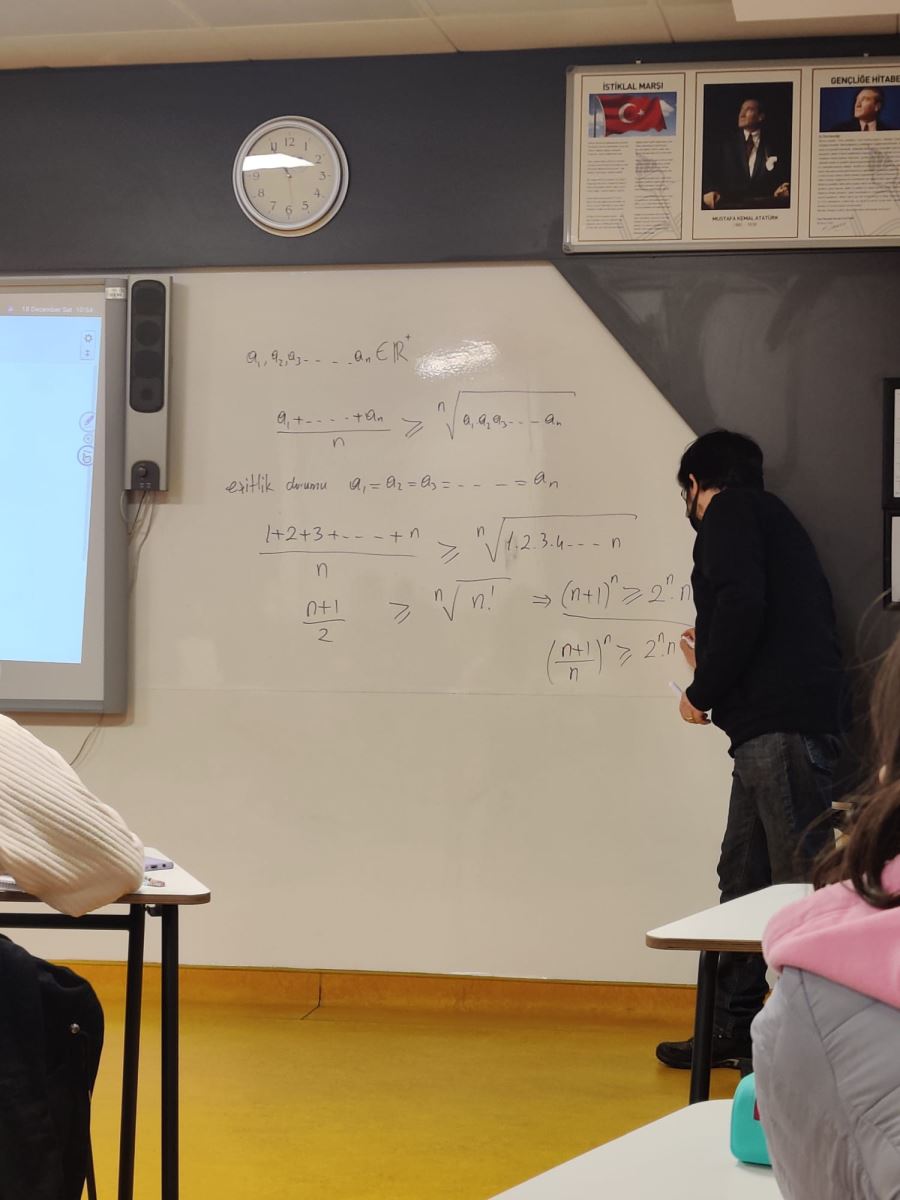
Students at Üsküdar American Academy will be able to make connections between different areas of mathematics and develop a deep understanding of the subject. They will learn to conduct research in English, interpret academic articles, and communicate effectively. As individuals capable of forming and testing hypotheses through logical processes, they will also gain the ability to use graphing calculators, artificial intelligence, and computer technologies at an advanced level . They will develop the habit of analyzing mathematical knowledge and expressing their reasoning clearly and systematically, both verbally and in writing. They will demonstrate a strong grasp of mathematical thinking by using proof and verification methods. Furthermore, they will acquire practical problem-solving strategies applicable to real life, improve their organization through consistent work habits and timely task completion, and learn the importance of critical thinking and the right of everyone to express their ideas.
Key Areas
At Üsküdar American Academy, our department emphasizes key skills such as analytical thinking, problem-solving, critical thinking, and creativity. We encourage students to break down complex problems, analyze content, and create their own work, fostering independence and innovation. Through hands-on projects, discussions, and the use of technology, students develop the ability to think critically, evaluate information, and find creative solutions. Our approach ensures students are well-equipped with the skills needed for success in both academic and professional environments.
.jpeg) Student Journey
Student Journey
At Üsküdar American Academy, the Mathematics Department fosters a collaborative learning environment through group work, peer teaching, and student-led initiatives. Activities like the Math Chronicles Club and peer tutoring programs encourage students to communicate ideas, lead discussions, and support one another’s growth. Participation in competitions and enrichment programs further connects students to broader mathematical communities, enhancing their problem-solving and communication skills. Through project-based learning and real-world applications in both IB and Honors courses, students learn to approach complex issues thoughtfully and collaboratively. These experiences prepare them to engage meaningfully in community dialogues and contribute to interdisciplinary conversations beyond the classroom.